
The HortiQD 3rd Webinar explores how plant health management is evolving in a context of reduced pesticide use, highlighting emerging trends, scientific advances, and practical challenges. This session brings together experts to discuss innovative approaches that support more sustainable and resilient horticultural systems.
ABSTRACT
The HortiQD 3rd Webinar examines how horticulture can adapt to the growing pressure to reduce pesticide use while safeguarding plant health and production quality. The session will explore both the biological and socio‑economic dimensions of this transition. Joanna Puławska (InHort) will outline the emerging threats linked to climate change, shifting pest ranges, and global trade, highlighting the need for early detection systems, agroecological approaches, and innovative plant protection strategies. Complementing this perspective, Dr. Johan Bremmer will present insights into farmers’ decision‑making processes, revealing the barriers that hinder the adoption of sustainable IPM tools and technologies across Europe. Together, these contributions offer a holistic view of the challenges ahead and the pathways toward more resilient, environmentally responsible crop protection.
AGENDA
February 25th, 2026
11:00 – 11:10
Welcome and introduction
Opening remarks and introduction to HortiQD Project.
11:10 – 11:50
Plant health: trends and challenges in the era of pesticides usage reduction
Speaker: Prof. Joanna Puławska
11:50 – 12:10
Triggers and trends to reduce pesticide use: insights from the socio-economic perspective
Speaker: Dr. Johan Bremmen
12:10 – 12:25
Q&A session
Opportunity for participants to ask questions to the speakers and discuss.
12:25 – 12:30
Closing Remarks
SPEAKERS
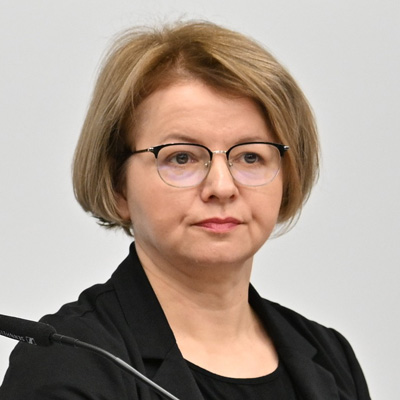
Joanna Puławska
Specialist in horticultural plant diseases, development of methods for detecting and identifying pathogens, their genetic diversity, genomics and transcriptomics, and plant protection. She conducts research, among others on modern plant protection methods aimed at reducing the consumption of chemical plant protection products and increasing the effectiveness of protection. This research includes the search for new substances, including biological agents that combat pathogens, as well as decision support methods, including remote sensing techniques and other aspects of precision agriculture. Supervisor of doctoral theses in the area of plant pathology. Coordinator and contractor of over 20 national and international scientific and research and development projects (including those of European Commission). Member of the management committees of three European COST Actions. Member of the International Committee for the Systematics of Prokaryotes, member of the boards of the Committee of Agronomic Sciences of the Polish Academy of Sciences and the Polish Phytopathological Society. Member of the Scientific Council of InHort.
Johan Bremmer
Johan Bremmer is a project manager and senior researcher with more than 25 years experience in research and project management. His research field is plant health economics with an emphasis on crop protection policy and on phytosanitary risk assessment. He has led several international projects, such as the Future of Crop Protection commissioned by STOA – European Parliament and an Impact Assessment of the F2F and Biodiversity Strategies on plant production commissioned by Croplife Europe and Croplife International. Currently, he is coordinating the Horizon Europe research project SUPPORT in which the adoption of IPM tools and technologies is analysed for the purpose of improvement of crop protection policy.